T20 World Cup 2026 Schedule and Venues: What the Eight-Ground Route Taught Fantasy Players
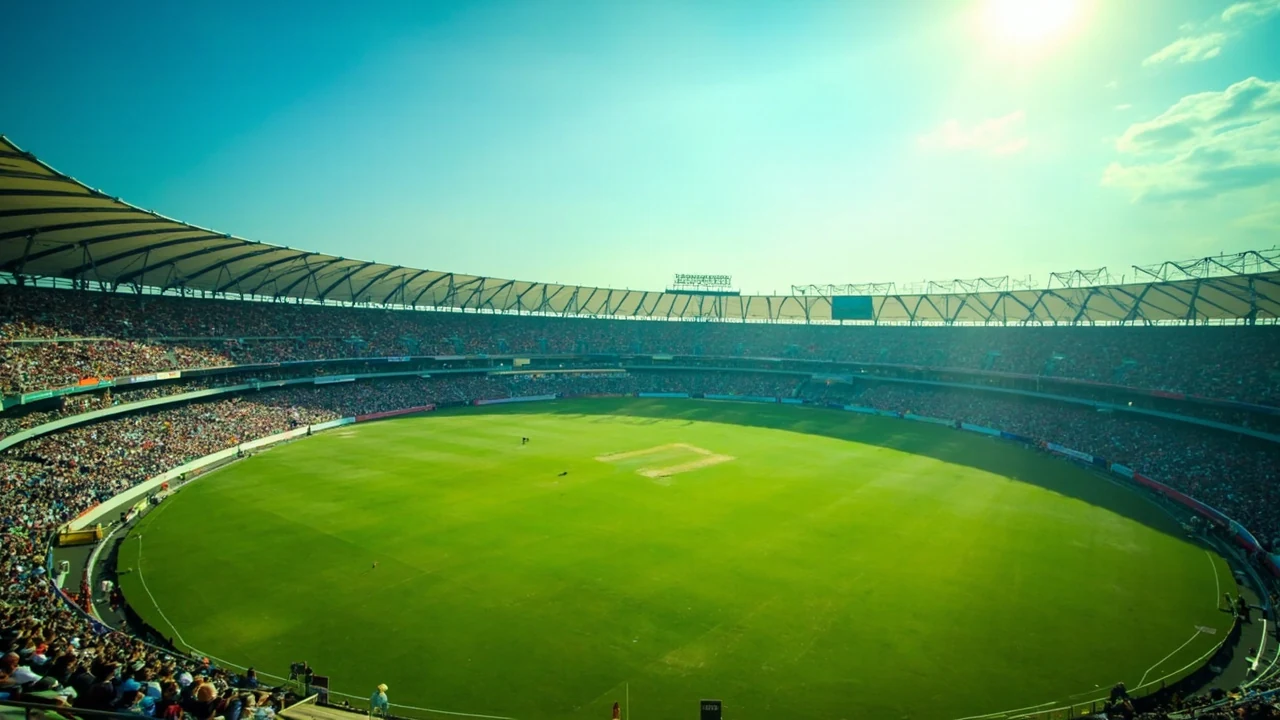
The 2026 ICC Men's T20 World Cup was completed between 7 February and 8 March 2026, with India and Sri Lanka co-hosting 55 matches across eight grounds. India retained the title and New Zealand finished as runners-up, but the tournament also left a useful schedule-and-venue case study for fantasy cricket players. A name such as Chennai or Mumbai was never enough on its own. The match stage, start time, surface history, travel cluster and likely dew all changed how a fantasy XI should have been built.
1. T20 World Cup 2026 schedule at a glance
The official schedule placed the main tournament over 30 days. The group stage ran from 7 to 20 February, followed by the Super 8 phase, then semi-finals on 4 and 5 March and the final on 8 March. Twenty teams played 55 matches. That compact design created little room for lazy assumptions because teams moved between different climate and pitch environments in a short period.
The hosting plan used five Indian venues—Ahmedabad, Chennai, Delhi, Kolkata and Mumbai—and three Sri Lankan venues—two in Colombo and one in Kandy. Warm-up matches were separate from the 55-match main schedule and ran from 2 to 6 February. A schedule page therefore needed to distinguish warm-ups, group games, Super 8s and knockouts rather than mixing every date into one list.
| Stage | Window | Planning signal |
|---|---|---|
| Warm-ups | 2–6 February | Role evidence, but not always a full-strength XI |
| Group stage | 7–20 February | 40 matches; widest spread of teams and match-ups |
| Super 8s | Late February | Stronger opposition and tighter role security |
| Semi-finals | 4–5 March | Reserve-day and knockout-pressure considerations |
| Final | 8 March | Ahmedabad; highest single-match scrutiny |
For future tournament research, this timeline is more useful than a raw fixture dump. First identify the stage, then the city, then the expected playing conditions. That order prevents a common mistake: applying an early-group-stage player trend to a knockout played at a different ground under a different tactical requirement.
2. The five Indian venues and their schedule roles
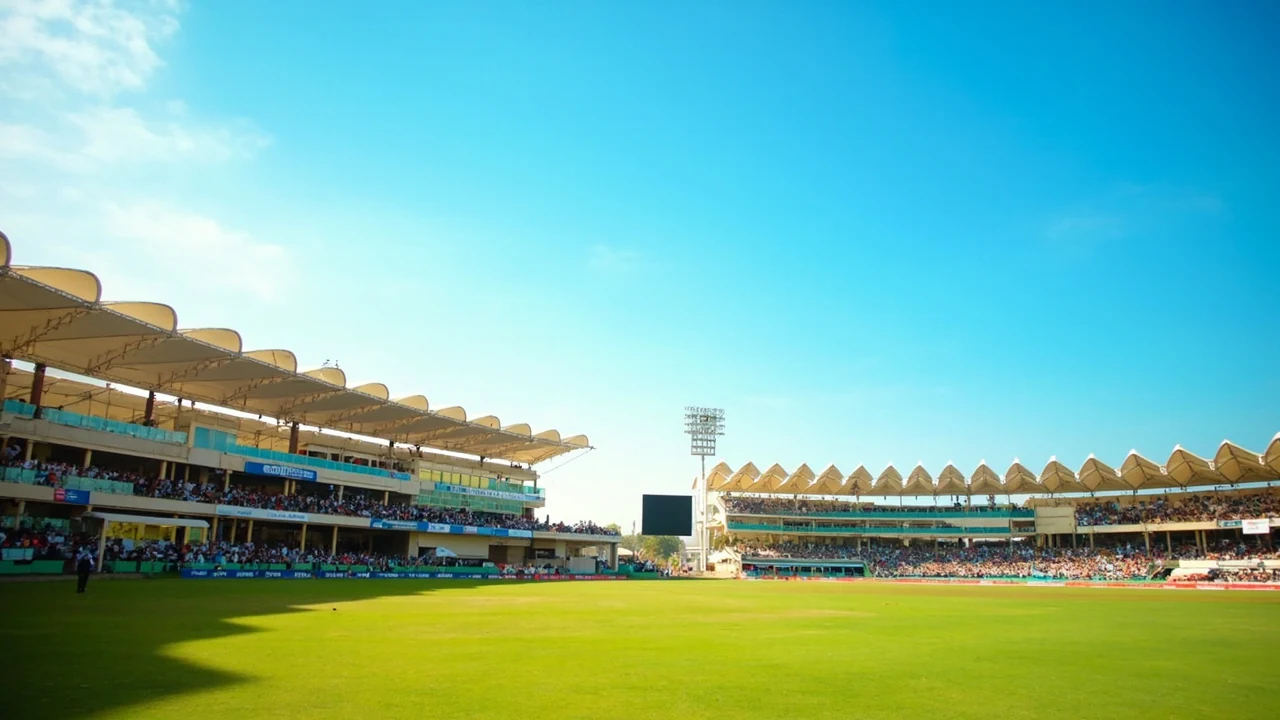
Narendra Modi Stadium, Ahmedabad hosted seven matches including the final. Its large scale can tempt analysts to write generic “big boundary” claims, but boundary dimensions and the active strip must always be checked for a particular game. The ground's schedule role mattered most: a final can produce different risk choices from a group match because teams protect wickets and react more sharply to scoreboard pressure.
M. A. Chidambaram Stadium, Chennai hosted seven matches. Chennai's reputation for grip made spin and pace-off options a natural part of pre-match research, yet it would have been wrong to lock three spinners before seeing the pitch and XIs. A fresh strip, dew or a powerful batting match-up could still move value toward top-order batters and death bowlers.
Arun Jaitley Stadium, Delhi staged six matches. Its shorter dimensions can increase boundary upside, but the used surface, time of day and recent scoring pattern should remain the evidence. Eden Gardens, Kolkata hosted seven matches including the first semi-final, while Wankhede Stadium, Mumbai hosted eight including the second semi-final. At the latter two, the new ball and evening conditions often deserved special attention before multiplier choices were made.
| Indian ground | Main-tournament matches | Schedule distinction | Fantasy check |
|---|---|---|---|
| Narendra Modi Stadium, Ahmedabad | 7 | Final | Active strip, boundary side, knockout tempo |
| M. A. Chidambaram Stadium, Chennai | 7 | India cluster | Grip, dew, spin versus pace-off balance |
| Arun Jaitley Stadium, Delhi | 6 | Compact-ground cluster | Boundary risk and death-over wickets |
| Eden Gardens, Kolkata | 7 | Semi-final 1 | New-ball movement and knockout plan |
| Wankhede Stadium, Mumbai | 8 | Semi-final 2 | Chase conditions and powerplay roles |
3. Why the Indian city label was only the first clue
Venue history is a prior, not a guarantee. A fantasy player researching Chennai could begin with spin, but should then inspect the actual surface, recent matches, weather and team balance. The same applies to Mumbai: a general expectation of runs does not remove the value of new-ball swing or death-over wickets. Reliable selection moved from broad venue knowledge to match-specific evidence.
Another useful lesson was to separate ground role from team reputation. The same batter could be a strong multiplier at one ground and merely a standard pick at another if batting position, opposition bowling and boundary access changed. The same spinner could gain value on a used afternoon strip and lose value in a dewy chase. Credits and popularity should come after that role assessment, not before it.
The schedule also concentrated important knockout matches in Ahmedabad, Kolkata and Mumbai. That should have triggered a new research pass rather than a copy of a group-stage team. Knockout squads tend to shorten their tactical experiments. Secure top-order positions and clearly defined bowling phases become particularly valuable when teams use their most trusted combinations.
4. The three Sri Lankan venues: Colombo was not one ground
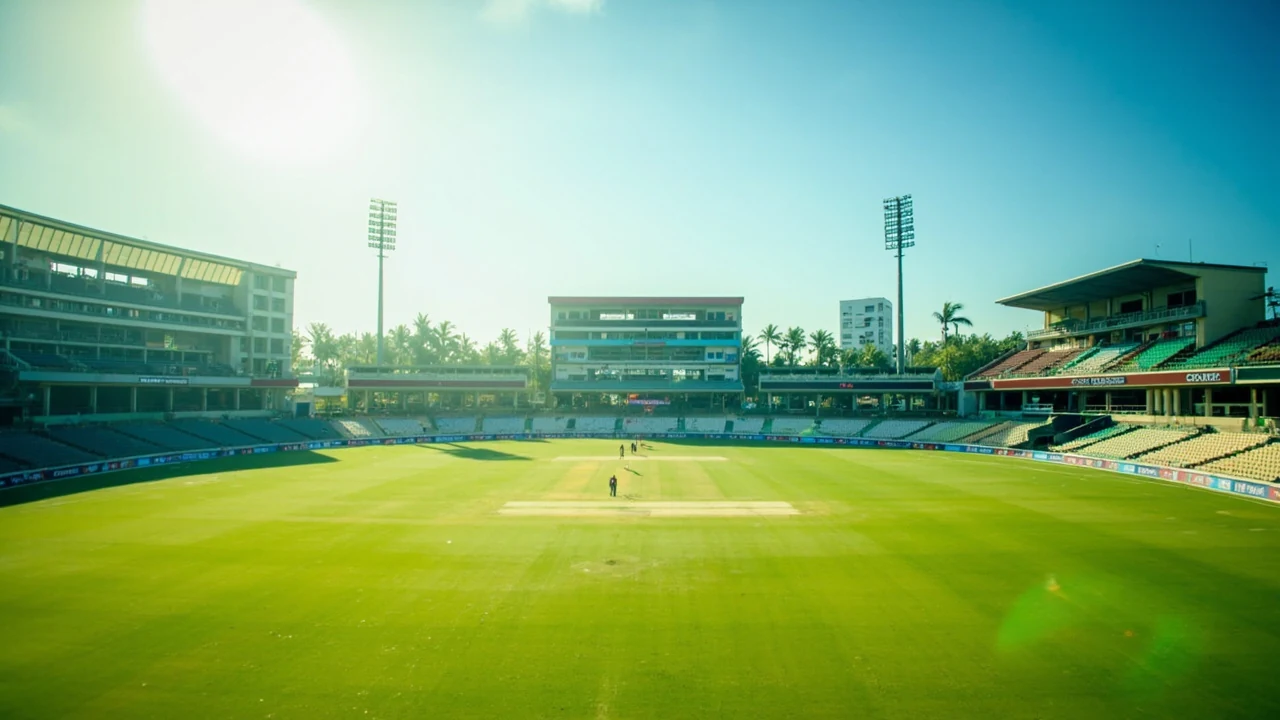
The Sri Lankan leg used R. Premadasa Stadium in Colombo, Sinhalese Sports Club Cricket Ground in Colombo and Pallekele International Cricket Stadium in Kandy. R. Premadasa hosted eight matches, SSC hosted five and Pallekele hosted seven. Together they accounted for 20 of the tournament's 55 main matches.
The crucial planning detail was that two grounds shared the Colombo city name. A schedule listing only “Colombo” could mislead users because R. Premadasa and SSC are different venues with different surfaces, dimensions and recent evidence. A proper fixture read should identify the exact ground before translating conditions into fantasy selections.
Kandy formed its own cluster through Pallekele. Travel and weather could affect preparation, while a day game and a night game at the same ground might not play identically. For fantasy analysis, the safe hierarchy was exact ground, surface report, start time, toss, playing XI and only then captain or vice-captain.
| Sri Lankan ground | Main-tournament matches | Pre-lock question |
|---|---|---|
| R. Premadasa Stadium, Colombo | 8 | Was the surface used, and was dew expected? |
| SSC Cricket Ground, Colombo | 5 | Did recent evidence support the same plan as R. Premadasa? |
| Pallekele International Cricket Stadium, Kandy | 7 | How did start time and weather change chase conditions? |
5. India-Sri Lanka venue clusters reduced some travel but changed research
Co-hosted tournaments create two layers of planning. Organisers use venue clusters to limit unnecessary travel, while fantasy users must recognise when a team crosses from one conditions family into another. A player's recent points can look stable even though the next match asks for a different skill: playing spin, using the new ball, operating at the death or managing a larger boundary.
A practical Khelbro11 notebook should therefore keep one line per match: city, exact ground, stage, start time, likely surface, dew probability and confirmed role. That simple grid is more actionable than a long list of historical averages. It also makes contradictory assumptions visible—for example, selecting several first-innings spinners while simultaneously building a story around heavy evening dew.
The cluster approach should not be used to predict results on its own. It is a research organiser. It tells you when to carry forward a venue note and when to reset it. If a team played consecutive games at the same exact ground, previous evidence deserved more weight. If it moved from Colombo to Mumbai, a fresh conditions review was mandatory.

6. How the 55-match schedule moved from groups to knockouts
The 20 teams were divided into four groups of five, with each team playing the other four sides in its group. That produced 40 group-stage matches. The top teams moved into the Super 8 phase, where the quality of opposition rose and lower-order or part-time roles could become less predictable.
This structure matters for post-tournament fantasy review. A player who dominated a weaker group opponent should not automatically have been projected to repeat against an elite Super 8 attack. Role security remained valuable, but opposition strength, likely match script and ground conditions needed to be updated at every stage.
The semi-finals were scheduled for 4 and 5 March, and the final for 8 March. Reserve days existed for the knockouts. Those rules were not decorative: weather risk can affect team construction, especially if a reduced match changes the value of accumulators, powerplay hitters or bowlers who rely on later overs.
7. The final route and reserve-day details
The first semi-final was allocated to Eden Gardens in Kolkata and the second to Wankhede Stadium in Mumbai, while the final was scheduled at Narendra Modi Stadium in Ahmedabad. Conditional arrangements existed around Pakistan's qualification, with Colombo identified as an alternate in specified scenarios. Schedule readers needed the latest official bracket rather than an old static graphic.
For fantasy users, a reserve day reduces cancellation risk but does not remove uncertainty. Teams can resume rather than restart a match, and player roles remain linked to the state of play. Any platform rules governing postponed or resumed matches should be checked separately because contest settlement is a product rule, not an ICC tournament rule.
By July 2026 the result was known: India became champion for a third time and New Zealand finished runner-up. This guide uses the completed schedule as a learning resource. It does not present February or March fixtures as upcoming matches and does not offer retrospective knowledge as if it had been available before the toss.
8. A five-step venue-first fantasy workflow
- Identify the exact fixture context. Record stage, date, start time and exact ground—not merely the host city.
- Read current conditions. Use the pitch report, weather, recent matches and any indication of a fresh or used strip.
- Map roles. Mark the expected top three, wicketkeeper, all-rounders with genuine overs, new-ball bowlers and death bowlers.
- Wait for the toss and XI. Remove non-starters, note the actual keeper and update for batting order or bowling changes.
- Choose multipliers last. Captaincy should follow opportunity and match story, not reputation or a previous-game points total.
This workflow would not have guaranteed a winning team. It simply improved consistency by making every selection answer the same questions. The strongest fantasy process is auditable: after the match, you can see whether the logic was sound even if an unpredictable dismissal or dropped catch changed the result.
Use different risk levels for different contests. In a small field, secure roles and high opportunity generally deserve priority. In a large field, a less popular player can be useful when the toss confirms a genuine role advantage. Low ownership alone is not an advantage; it must be linked to plausible balls faced, overs bowled or fielding opportunity.

9. Venue myths that the tournament schedule challenged
- “Chennai always means load up on spin.” Start with the spin question, then verify the active strip, dew and XIs.
- “Mumbai is only a batting venue.” New-ball and death phases can still create the highest-upside bowling events.
- “Colombo is one conditions bucket.” R. Premadasa and SSC must be researched as separate grounds.
- “Knockouts are automatically low scoring.” Pressure affects tactics, but pitch, boundary size and match-up still control the likely range.
- “Last-match points predict the next match.” A venue move can change batting time, bowling phases and matchup quality.
The answer to each myth is not another fixed rule. It is a better sequence of checks. Venue knowledge narrows the questions; the toss and XI resolve them. That method also keeps content accurate because it separates durable facts—the ground and schedule—from per-match variables that can change quickly.
10. Editorial verdict: what to save from the 2026 route
The most valuable artifact from the T20 World Cup 2026 schedule is an eight-ground comparison sheet. Five Indian venues and three Sri Lankan venues created distinct research environments inside one event. Exact-ground identification, especially in Colombo, was the first safeguard against applying the wrong conditions profile.
The second lesson is stage awareness. Group, Super 8 and knockout matches should not be analysed with identical assumptions. Opposition quality rises, tactical experiments shrink and reserve-day rules become more important. A schedule is therefore more than dates—it is the structure around player opportunity.
Finally, keep the process responsible. Fantasy cricket involves uncertainty and should be treated as entertainment. Set a spending limit before joining a contest, avoid chasing losses and use Khelbro11's responsible-play guidance. Historical analysis can sharpen decisions, but it cannot make a future result certain.
Frequently asked questions
When was the 2026 Men's T20 World Cup played?
The main tournament ran from 7 February to 8 March 2026. Warm-up matches were held from 2 to 6 February.
How many matches and teams were in the tournament?
Twenty teams played 55 main-tournament matches across the group stage, Super 8s and knockout phase.
Which countries hosted the T20 World Cup 2026?
India and Sri Lanka co-hosted the event. Five grounds were used in India and three in Sri Lanka.
Which venue hosted the 2026 final?
Narendra Modi Stadium in Ahmedabad hosted the final on 8 March 2026.
Which grounds were used in Colombo?
R. Premadasa Stadium and the Sinhalese Sports Club Cricket Ground were both used. They should be treated as separate venues in fantasy research.
Who won the 2026 Men's T20 World Cup?
India won the tournament, securing a third title, while New Zealand finished as runners-up.
Sources and methodology
Schedule dates, stage structure and venue allocation were checked against the ICC tournament announcement, the ICC Men's T20 World Cup hub, and the 2026 Men's T20 World Cup reference page, which cites the official fixture and venue releases. Match counts are main-tournament counts and exclude warm-ups. Last checked 19 July 2026.