
Next Decade Is India's: Dinesh Karthik's X Post After Dharmendra Pradhan's Resignation
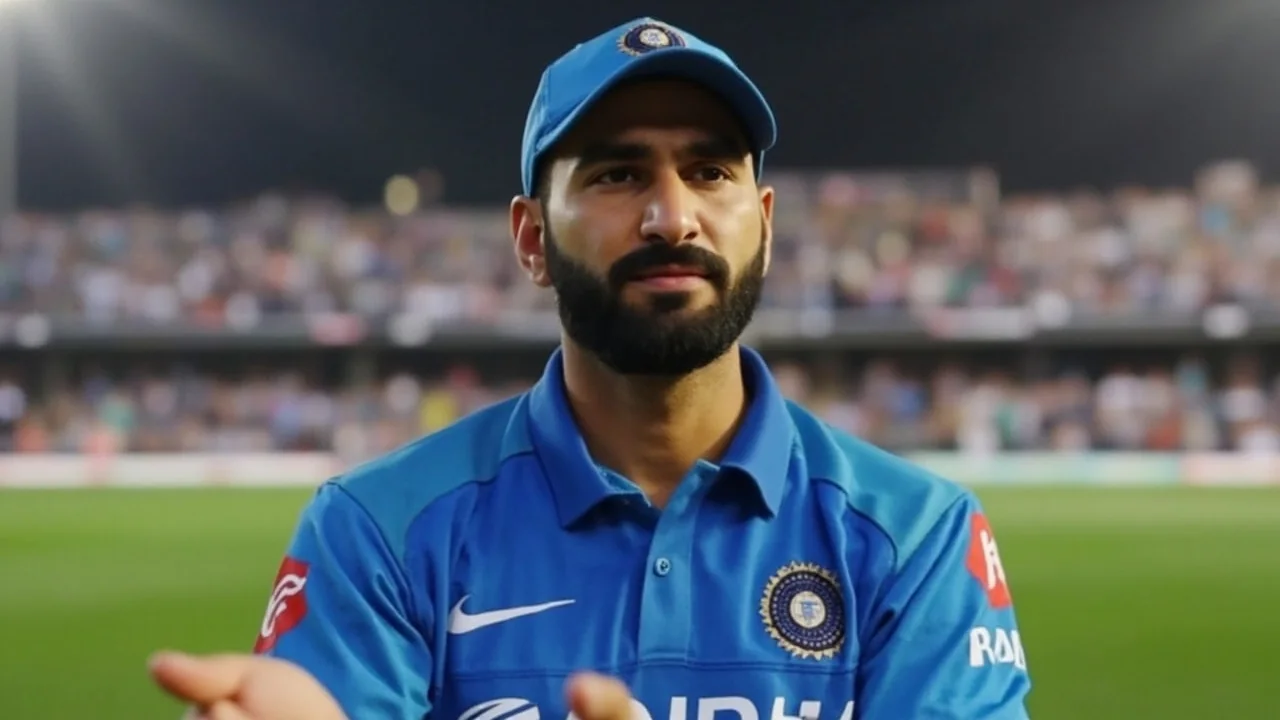
Former India wicketkeeper-batter Dinesh Karthik posted on X that "the next decade is India's", hours after Union Education Minister Dharmendra Pradhan submitted his resignation to Prime Minister Narendra Modi on 25 July 2026. The post did not name Pradhan directly. It framed the moment around "the clarity, collaboration and relentlessness of the younger generation" and ended with "Jai Hind". A close read of the post, and of the weeks of student protest that preceded it, explains why the two events landed on the same day.
What Karthik actually wrote
The Hindustan Times report by Vishesh Roy carries the Karthik post in full. It reads: "At the end of the day, we're all working towards a better India. The clarity, collaboration and relentlessness of the younger generation is something that I'm extremely in awe of. The future is bright, and the next generation is going to take us to new heights. Jai Hind." The caption on the post is "The next decade is India's". Karthik is identified in the article as the batting coach and mentor for Royal Challengers Bengaluru in the IPL.
That is the entire content of the post. There is no attack on a party, no call for a specific political outcome, and no instruction to readers. The framing is generational rather than partisan. It treats the protests as evidence of a particular kind of civic energy and frames "the next decade" as a window shaped by people who are not yet old enough to vote in many cases.
Reading the post as a coach speaking is consistent with his current role. As RCB's batting coach and mentor, Karthik works with players between 18 and 35 every day. The post reads like a coach who has been watching young athletes organise themselves and is generalising from that observation to a wider national mood. That is a description, not a defence of any one protest line.
Why Pradhan resigned on 25 July
Pradhan had been under sustained pressure for several weeks over the alleged NEET paper leaks. The leaks, first reported in exam-season coverage, triggered student protests that escalated through July 2026. On his own X account, Pradhan wrote: "The youth power of India is the real strength of this country". He said he had sent his resignation letter to the Prime Minister "considering the students' situation". Hindustan Times carried the resignation as a cricket-section item because of the Karthik post, but the underlying event sits inside the broader NEET protest story.
It is worth separating two things that often get blurred in coverage. Pradhan's resignation is a political fact: a cabinet minister submitted a letter of resignation to the Prime Minister on a specific date. The NEET paper-leak protests are a civic fact: students organised public demonstrations, mostly in Delhi, over a defined period. Karthik's post is a separate cultural fact: a former cricketer wrote a public message that engaged with the mood of the moment without endorsing any specific policy. The three facts interact but are not the same fact.
For Indian cricket readers, the overlap matters because the cricket and political-news desks at major publishers increasingly share the same homepage. A cricket-section headline can carry a story that is fundamentally about a student movement and a cabinet resignation. That is part of why the Karthik post is being read so widely. It is one of the rare instances in 2026 where a current or recently retired cricketer has commented on a domestic news event in language that is neither promotional nor accusatory.
"The youth power of India is the real strength of this country."
Dharmendra Pradhan, X, on submitting his resignationThe movement behind the resignation
For readers who did not follow the protests day by day, three concrete markers define the period the post sits inside. First, the largest gatherings were led by the Cockroach Janta Party (CJP) at Delhi's Jantar Mantar. The name is provocative on purpose; the group has organised previous high-visibility demonstrations and is identified in the Hindustan Times report as the principal organiser of the NEET-related protests. Second, on 20 July 2026 protesters marched from Jantar Mantar toward Parliament and were stopped by Delhi Police using lathi charge and tear gas. Third, engineer-educator Sonam Wangchuk joined a hunger strike that lasted 26 days in support of the students' demands.
None of those three markers are cricketing facts. They are reported here only because they explain the political backdrop against which Karthik chose to post. A post about "the younger generation" written on 25 July 2026 lands differently than it would have landed in March. The protests were the immediate context, even though the post itself does not name any protest, party, or leader.
Wangchuk's 26-day fast deserves its own note. A hunger strike of that length in the Indian climate is a serious physical undertaking. The fact that an educator known for the Himalayan Institute of Alternatives was willing to take it on tells you the protests drew support beyond students and parents. It also kept the story on the front pages of regional and national outlets for nearly a month, which is part of why a cabinet resignation eventually arrived.
What Karthik did not say
The post is short, but several things are absent in a way that matters. He did not call for an inquiry, did not name a paper-leak suspect, did not endorse any political party, did not demand Pradhan's resignation, and did not ask readers to take a specific action. He also did not criticise the police response at the 20 July march, did not mention NEET by name, and did not weigh in on Wangchuk's fast. The post is a mood statement, not a position paper.
That absence is a deliberate editorial choice. A coach speaking to a young audience does not gain credibility by issuing policy demands. Karthik's professional currency is built on technical respect from players. A post that read like a press release would have eroded that currency quickly. The chosen register: awe, brightness, the next decade, keeps the post inside the register of a public figure noting a generational mood without claiming authority over it.
How to read a single X post from a sportsperson
Public posts from athletes tend to be over-read. A short message on a topic outside their sport is usually best read as a window into what they noticed that week, not as a researched policy position. Karthik works with young players daily. He was almost certainly watching the protests either directly or through his social feed. The post reads as one person's response to that observation, written in a register he would use with a dressing room.
For fantasy readers and cricket-followers, the practical question is whether this changes how they should think about Karthik's public voice. The short answer is no. He has not announced retirement, has not changed his IPL role, has not joined any political party, and has not signalled a career shift outside cricket. The RCB batting-coach and mentor role is unaffected. The post sits alongside his other public commentary as a one-off, not as a turn in his professional trajectory.
What this means for Indian cricket readers
The most useful takeaway is structural rather than personal. Cricket and news desks in India increasingly share the same audience and the same headline space. The Hindustan Times placement of this story under Cricket is not accidental. The publisher is signalling that the Karthik post, not the NEET protests themselves, is the cricket-relevant event. Indian readers who follow the sport will keep seeing such overlaps through the rest of 2026 and into the T20 World Cup cycle, especially if current or recently retired players speak publicly on civic issues.
That has a small fantasy consequence. Player reputation in India affects brand value, signing value, and eventually commentary and coaching shelf life. A post that lands well does not move fantasy points in any contest, but it does affect how a player's image survives the transition from playing career to post-playing career. For a batting coach still building his post-IPL profile, that kind of post is part of how a long second innings in the sport gets constructed.
What this story does not settle
The resignation opens more questions than it closes. Who succeeds Pradhan at the Ministry of Education? Will the NEET review announced in earlier coverage actually lead to structural changes in how the exam is administered? What happens to the CJP-led demands around the lathi charge on 20 July? None of those questions are settled by either the resignation or the Karthik post. They are the open threads readers should watch over the next two to four weeks.
The Karthik post, separately, does not establish a pattern. It is one post, on one day, on one platform, on one news cycle. Future posts may go in a different direction, may stay quiet on civic issues, or may engage with sport-only themes. Treating it as a one-off is the disciplined read. Treating it as the first chapter of a new public voice is over-reading.
Questions readers are asking
What did Dinesh Karthik post on X on 25 July 2026?
Karthik posted that "we're all working towards a better India", praised the "clarity, collaboration and relentlessness of the younger generation", and captioned the post "The next decade is India's". The post appeared hours after Dharmendra Pradhan resigned as Education Minister.
Why did Dharmendra Pradhan resign as Education Minister?
Pradhan stepped down on 25 July 2026 after weeks of student protests against alleged NEET paper leaks. The Cockroach Janta Party (CJP) led the largest gatherings at Delhi's Jantar Mantar, and Pradhan said he had sent his resignation to Prime Minister Narendra Modi considering the students' situation.
Who is Sonam Wangchuk and what role did he play?
Sonam Wangchuk is an engineer-educator from Ladakh who joined a hunger strike in support of the protesting students. The strike lasted 26 days and helped keep the issue in front of the national press.
What happened at the 20 July 2026 march to Parliament?
On 20 July 2026, protesters marched from Jantar Mantar toward Parliament and were stopped by Delhi Police using lathi charge and tear gas. The march had been called to press demands around the NEET paper-leak allegations.
What role does Dinesh Karthik hold with Royal Challengers Bengaluru?
According to the Hindustan Times cricket-section byline on this story, Karthik is identified as the batting coach and mentor for Royal Challengers Bengaluru in the IPL.
Source note
Primary source: Hindustan Times cricket-section report by Vishesh Roy titled "Next decade is India's: Dinesh Karthik reacts after Dharmendra Pradhan resigns as Education Minister", published 25 July 2026 at 16:12 IST (publisher timestamp 10:42 UTC). Confirmed facts used in this file: Karthik's verbatim X post, the "next decade is India's" caption, Pradhan's resignation submission to the Prime Minister, the CJP-led Jantar Mantar protests, the 20 July lathi-charge march, Wangchuk's 26-day hunger strike, and Karthik's identification as RCB batting coach and mentor. The Hindustan Times article body was verified via a Wayback Machine capture taken on 25 July 2026; the publisher URL is hindustantimes.com. For ongoing wires on Indian cricket and fantasy desk notes, follow the cricket news desk on Khelbro11.