
IPL 2026 Business Value Reaches $20.6 Billion: Houlihan Lokey Study, RCB Top Team, Tycoons Add Royals
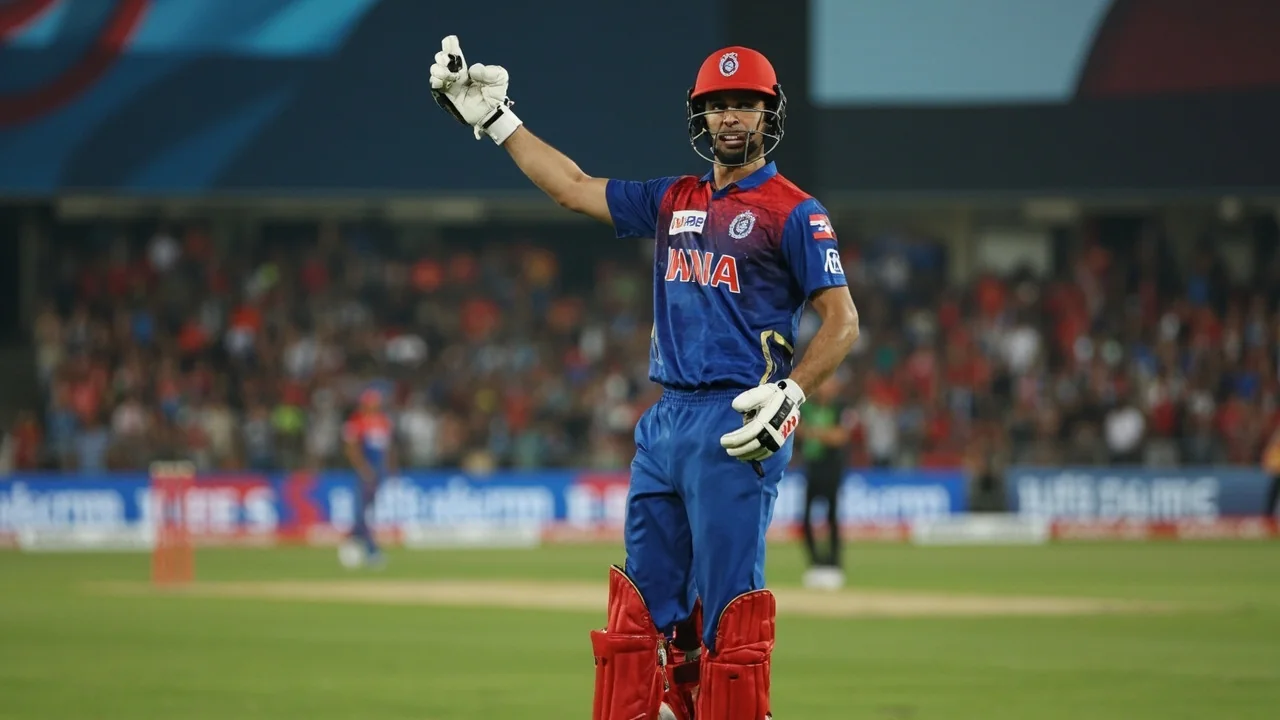
The Indian Premier League's business value reached $20.6 billion in 2026, an 11.4% increase year-on-year, according to Houlihan Lokey's 2026 IPL Brand Valuation Study. On a per-match basis, the IPL now ranks behind only the National Football League globally. Royal Challengers Bengaluru is the league's most valuable team, and two of the year's biggest ownership stories sit inside a single valuation: a Mittal-Poonawalla consortium buying Rajasthan Royals for $1.65 billion (announced May 2026), and a Birla-Times of India Group consortium taking a stake in RCB for just under $1.8 billion (March 2026).
The number
The headline out of Houlihan Lokey's 2026 study is the headline anyone in Indian sport has been quoting all week: $20.6 billion. That is the IPL's enterprise or business value, a measure that captures the league itself plus its commercial structure, broadcast rights, digital inventory, and central sponsorship flow. It is the number that franchises, boardrooms, and broadcasters look at first when the annual study lands.
The 11.4% year-on-year increase is the second important read. It tells you the league is not merely expensive; it is still compounding. The previous year's study was already a record at the time, and this year's figure is a fresh record on top of that. Compound growth at this size for a property that runs for roughly two months a year is what makes the global comparison interesting. The IPL does not sell 17 home games a week for six months. It sells a tight, high-attention window, and each window is now worth more than the last.
The standalone brand value, at $4.3 billion, is up 10.3% year-on-year. That is the figure that strips out the central commercial machinery and asks what the words "Indian Premier League" are worth on their own. A 10.3% brand-only increase is roughly in line with the headline number, which is the result you would expect when central revenue and brand reputation are pulling together rather than against each other.
Where the IPL stands globally
The comparative line in the Houlihan Lokey study is the one that has travelled furthest because it is the most counterintuitive. On a per-match basis, the IPL ranked behind only the National Football League globally. Consider what that actually means. The NFL sells out a 17-game regular season, four preseason games, a playoff bracket, and a Super Bowl, with American broadcast rights that have been pre-sold for more than a decade at a time. The IPL, by contrast, runs roughly two months a year, plays a home-and-away round-robin plus playoffs, and depends heavily on a single broadcast cycle that has been renegotiated in shorter windows.
Per-match comparison is not a perfect like-for-like. The NFL fans are different, the matchdays are different, and the broadcast structures are different. But the directional signal is real: the IPL is now the second-most-valuable live sport product on Earth, ticket for ticket. That is the headline that matters for prospective franchise owners, sponsors considering the next media-rights cycle, and advertisers trying to figure out where attention is going to land in the second half of the decade.
It also helps explain why the 2026 ownership trades were priced where they were. A $1.65 billion price for Rajasthan Royals and a near-$1.8 billion stake in RCB are not standalone decisions. They are bets on a market that has just been told, by a respected independent valuation house, that the league is bigger and more durable than the previous figure suggested.
RCB at the top of the team table
Royal Challengers Bengaluru, described as the reigning champion in the Houlihan Lokey study, is the league's most valuable team. RCB being at the top is not, in isolation, a surprise. They have played in multiple finals, they have a deep and loyal fan base, and their home ground at Chinnaswamy is the highest-scoring venue in the league. What is new is the explicit signal Houlihan Lokey has now put on the front of the study: in 2026, the team is the most valuable franchise in the league.
The March 2026 transaction sharpened the picture. United Spirits sold a stake in RCB to a consortium that includes Kumar Mangalam Birla and The Times of India Group for just under $1.8 billion. That is a single-stake sale at a price that would have been implausible for most IPL franchises five years earlier. It also tells you who is buying. The Birla family is among the most established Indian industrial groups still building a media and consumer footprint. The Times of India Group is one of the country's largest English-language newspaper houses. Both names carry commercial weight that goes beyond sports.
The transaction is the cleanest read on what an RCB ownership share is worth in 2026. Earlier franchise valuations were estimates. The 2026 Houlihan Lokey study is an independent model; the March 2026 RCB sale is a real price agreed by a willing buyer and a willing seller. The two numbers are within the same range, which is the result you want to see when you are asking whether a market is functioning.
India's top conglomerates are now treating IPL franchises as core strategic assets, not trophy sports plays.
Editorial read, on the Birla-Times and Mittal-Poonawalla dealsThe Royals sale and what it tells us
In May 2026, a consortium led by Lakshmi Mittal and Adar Poonawalla said it would buy Rajasthan Royals in a deal valued at $1.65 billion. The Mittal family runs the world's largest steelmaker outside China. Adar Poonawalla runs the Serum Institute of India, the world's largest vaccine manufacturer by number of doses. Between them, they are two of the most internationally recognised Indian industrial figures of the past two decades.
The Royals were the original IPL fairy tale. They won the first IPL in 2008, briefly lost their franchise, and won it back through an auction. Their value over the past decade has been a frequent reference point for what a successful but mid-tier franchise can be worth. The $1.65 billion price tag suggests that the mid-tier is no longer where the Royals sit. The new owners are inheriting a competitive squad, a strong Rajasthan fan base, and a media-rights environment that has lifted every franchise in the league.
There is a useful comparison in the structure of the two deals. RCB fetched a near-$1.8 billion stake sale in March 2026. Royals are being sold at $1.65 billion for a controlling change in May 2026. Royals is a whole franchise, RCB is a stake. That is part of why the headline numbers are not directly comparable, but the order of magnitude is consistent: the league's upper tier is now priced in the $1.5 billion to $2 billion range, and the Houlihan Lokey headline is consistent with that.
Verified facts at a glance
| Measure | 2026 figure | Year-on-year |
|---|---|---|
| IPL business value | $20.6 billion | +11.4% |
| IPL standalone brand value | $4.3 billion | +10.3% |
| Most valuable team | Royal Challengers Bengaluru | (reigning champion) |
| Global per-match rank | 2nd, behind the NFL | (Houlihan Lokey 2026) |
| Rajasthan Royals sale | $1.65 billion (May 2026) | Mittal-Poonawalla consortium |
| RCB stake sale | Just under $1.8 billion (Mar 2026) | Birla & Times of India Group consortium |
What this changes for people who follow the league
The first thing it changes is the conversation franchises have with the BCCI about the next media-rights cycle. The Houlihan Lokey number is independent, and an independent board telling the Indian market that the IPL is worth $20.6 billion in 2026 is a powerful baseline when the next auction is being negotiated. The broadcast-rights cycle still has several years to run, but the option value of the IPL is now on a clear uptrend.
The second thing it changes is what fans and commentators should expect from franchise-level decision-making. When a Royals sale lands at $1.65 billion and a Birla-Times consortium takes a stake in RCB at near $1.8 billion, the people writing the cheques are not buying a sports team in the traditional sense. They are buying a media asset that happens to take the form of a cricket team. Sponsorship strategy, digital content, travel-hospitality rights, and overseas match windows are now first-order decisions, not second-order ones.
The third thing it changes is the competitive ceiling. A franchise that costs $1.6 billion on the open market is one that can afford to invest in talent pipelines, support staff, building technology, and analytics. That is good news for the on-field product, and it is the reason the 2026 season has, by common observation, looked stronger than its predecessors in several mid-table battles.
What the Houlihan Lokey study does not say
The 2026 study is a valuation, not a forecast. It does not promise that the IPL will reach $25 billion next year, does not name which two or three franchises are likely to be the next to trade, and does not make any specific prediction about the next media-rights cycle. The study reports the value of the league as of the 2026 measurement window. Every forecast published in the days after the study's release is the work of commentators, not Houlihan Lokey.
The study also does not break out the per-team valuation in detail in the public summary. The headline tag is that RCB is the most valuable team, but the gap to the second-most valuable team is not in the public release. That is a gap that other franchise owners will be watching, and it is the gap that will define the next round of M&A conversations around the league.
The numbers also do not capture intangibles that affect franchise economics. The IPL runs for roughly two months each year, which means owners have ten months a year to monetise the brand off the field. That is the part of the equation that has driven digital-content investment, franchise academies, and the growing overseas-window ecosystem. The Houlihan Lokey study does not split that out, but it is part of what the buyers in the 2026 round were paying for.
What the IPL 2026 valuation means for the fantasy desk
For fantasy cricket readers, the strategic takeaway is not about captain picks. It is about structural change. The Birla-Times consortium at RCB, the Mittal-Poonawalla consortium at Royals, and the broader rise in franchise value have raised the cost of ownership, which means the patience of new owners for underperformance has shortened. The two-window replacement cycle, the impact-player rule, and the auction purse inflation are all part of a league where the dollars flowing in are bigger than the dollars flowing in five years ago.
That is good news for player salaries. It is also good news for the league's depth of talent, because owners can afford to invest in squad-building instead of gambling on three or four stars. From a fantasy angle, that means more viable captain candidates per match, more differential picks that do not feel like long-shots, and a wider talent pool.
The practical outcome is that you should expect the fantasy points map to keep widening. Where 2024 captains in any match were perhaps 6-8 names, and 2025 was 10-12, 2026 already looks like 15+ names can win a captain pick on a given night. The Houlihan Lokey number is the macro frame for that; the team-level decision-making is the micro frame.
What to watch next
The next two events that will test whether the $20.6 billion figure holds are: the next media-rights cycle when the BCCI begins the next formal process, and the next marquee franchise transaction. A sale or stake change at any of the top four franchises, including a possible overseas investor involvement, would be the cleanest test of the Houlihan Lokey number on a live market.
For fans and fantasy players specifically, the more useful next event is the next round of player retentions and the IPL 2027 auction calendar. The 2026 valuation gives the league flexibility to lift or hold the auction purse, and that is the lever that affects captain picks most directly. Watch for the BCCI's formal communication about the IPL 2027 calendar window in the second half of this year.
Questions readers are asking
What is the IPL 2026 business value, according to Houlihan Lokey?
Houlihan Lokey's 2026 IPL Brand Valuation Study put the Indian Premier League's business value at $20.6 billion in 2026, an 11.4% increase over the previous year.
How much is the IPL standalone brand worth?
The same study valued the IPL's standalone brand at $4.3 billion in 2026, up 10.3% from 2025.
Which IPL team is the most valuable?
Royal Challengers Bengaluru, described as the reigning champion in the source report, is the league's most valuable team.
Who is buying Rajasthan Royals, and for how much?
In May 2026, a consortium led by Lakshmi Mittal and Adar Poonawalla said it would buy Rajasthan Royals in a deal valued at $1.65 billion.
What is the RCB ownership change in 2026?
In March 2026, United Spirits sold a stake in Royal Challengers Bengaluru to a consortium including Kumar Mangalam Birla and The Times of India Group for just under $1.8 billion.
How does the IPL compare globally on a per-match basis?
Houlihan Lokey's 2026 study ranked the IPL behind only the National Football League globally on a per-match basis.
Source note
Primary source: Business Standard, "IPL's business value rises to $20.6 billion in 2026 as tycoons flock", published 30 July 2026 at 13:21 IST. The article reports Houlihan Lokey's 2026 IPL Brand Valuation Study, including the headline $20.6 billion business value, the 11.4% year-on-year rise, the $4.3 billion standalone brand value (+10.3%), the global per-match ranking behind only the NFL, RCB being the most valuable team as reigning champion, the May 2026 Mittal-Poonawalla consortium purchase of Rajasthan Royals at $1.65 billion, the March 2026 United Spirits stake sale in RCB to a consortium including Kumar Mangalam Birla and The Times of India Group for just under $1.8 billion, and the franchise-based IPL launching in 2008 and running for roughly two months each year. The publisher URL is business-standard.com. The hub contextual link for this note is the editorial desk's IPL 2026 coverage on Khelbro11.